
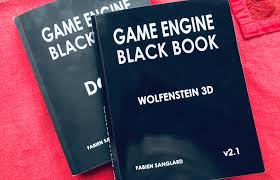
Lovingly reproduced from the Game Engine Black Book: Wolfenstein 3D by Fabien Sanglard.
Why Wolfenstein 3D Changed Everything (And Almost Didn't Exist)
Released on May 5th, 1992, Wolfenstein 3D didn't just launch a game. It invented a genre.
Before Wolf3D, there was no such thing as a "First Person Shooter." id Software created that category from scratch, and they did it on hardware that was never supposed to run anything like it.
The wrong machine for the job
The IBM PC was built for office work. Word processors. Spreadsheets. Boring stuff. It wasn't designed for games, and certainly not for a full-screen, three-dimensional, pixel-by-pixel rendered experience. Consoles of the era (the Super NES, the Genesis, the Neo-Geo) had dedicated sprite engines that could push smooth 60fps animation with relative ease. Even the Amiga 500 had co-processors designed specifically for animation.
So why did id Software pick the PC?
One word: framebuffer.
The kind of game they wanted to make, a fully immersive 3D world, couldn't be faked with sprites or console tricks. Every pixel on screen had to be drawn individually, in real time. For that, you needed raw CPU power. And on that front, a 386 PC left every console of the time in the dust. The 386DX at 33MHz pushed 8 MIPS. A Super NES managed 1.4. A Genesis, 1.79. It wasn't even close.
Three "impossible" problems
Choosing the PC was the easy part. Actually making it work? That was another story entirely. The hardware threw up obstacles that looked genuinely unsolvable:
1. The VGA couldn't double-buffer. Without double buffering, animations produce ugly visual tears: you see half the old frame and half the new one at the same time. Smooth motion seemed impossible.
2. The CPU only did integers. 3D math needs fractions. The chip couldn't natively handle them. Floating point was either missing or brutally slow.
3. The PC Speaker only made beeps. The default sound device produced square waves, not exactly the crisp gunshots and enemy barks Wolf3D would become famous for.
And beyond those big three, the list kept going: RAM was limited to 1MB, the bus was slow, pixels weren't even square (the framebuffer got stretched vertically on screen), and the audio hardware was a fragmented mess with every device needing its own custom support.
In short, the machine seemed doomed to do boring things. id Software disagreed.
A secret kept, then shared
When Wolf3D shipped, the engine's inner workings were closely guarded. Fans reverse-engineered the asset formats quickly enough, and mods with custom maps, graphics, and sounds appeared within months. But how the 3D engine achieved its speed remained a mystery. Competitive advantage, plain and simple.
That changed on July 21st, 1995, when id Software did something almost unheard of: they uploaded the full engine source code to their FTP server, free for anyone to read and build. John Carmack put it simply:
"Programming is not a zero-sum game. Teaching something to a fellow programmer doesn't take it away from you."
Opening the source had two lasting effects nobody fully predicted. First, it let the game live on long after DOS and the 386 were gone, with programmers porting Wolf3D to everything. Thirty years later you can still run it on almost any device with a screen. Second, it left behind a time capsule: a window into exactly how a tiny team in 1991-92 took an office machine, threw out the rulebook, and turned it into the best gaming platform in the world.