
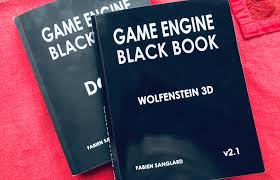
Lovingly reproduced from the Game Engine Black Book: Wolfenstein 3D by Fabien Sanglard.
Spear of Destiny: More Wolf, Different Wolf
Lovingly reproduced from the Game Engine Black Book: Wolfenstein 3D by Fabien Sanglard.
Wolfenstein 3D was a colossal financial success. Six episodes, each with ten levels, and fans still wanted more. id Software contracted other studios to create additional episodes, and worked on a sequel of their own.
Released on September 18th, 1992, Spear of Destiny used the same engine as Wolf3D but with new graphics, new music, and a single episode of 21 levels. It was a prequel, following the adventures of B.J. Blazkowicz before the events of Wolfenstein 3D.
Why It Made Sense
Making a sequel was a straightforward business decision. Sales momentum was strong, so it would have been foolish not to capitalize on it. More practically, a sequel allowed the engineering team to spend time building the next generation of engine (which would become Doom) while keeping the artists and designers occupied. The Wolfenstein engine was known territory. A new content set could be produced quickly.
What Was New
Despite sharing the engine, Spear of Destiny introduced a few genuine innovations.
The most visible was the use of large, partially transparent sprites to simulate vegetation. Putting trees and bushes into a raycasting engine is not trivial: sprites are rendered by the same system that handles enemies and items, and large sprites with a lot of transparent pixels created performance challenges the original game didn't have to deal with.
The level design also attempted to break free from the rigid orthogonal feel of Wolf3D. The maps in Spear of Destiny were designed to use more of each map's available real estate, with layouts that felt less like grid after grid of rectangular rooms.
The final boss, the Angel of Death, signaled a significant thematic shift. The "hero fighting demons with big guns" setup was a clear foreshadowing of what id was building next. The game's red-tinged, supernatural late stages look like a dry run for Doom's aesthetic.
Copy Protection
Wolfenstein 3D had no copy protection. Copying a shareware floppy was trivially easy, and id lost money because of it. Spear of Destiny used the classic early-90s solution: a question-and-answer system tied to the printed game manual. Since copying a floppy was easy but photocopying a booklet was harder, players were required to look up an answer in the manual before the game would start.
The copy protection system had backdoors, almost certainly private jokes. Typing certain phrases (including "bite me!" and "joshua," a reference to the 1983 film WarGames) would bypass the protection with a custom response. "Joshua" unlocked the game with the message: "Greetings Professor Falken, would you like to play Spear of Destiny?"
Another response: "I wish I had a 21" monitor..." Almost certainly John Carmack's contribution.
What Came Next
After Spear of Destiny, id kept making games powered by their technology. The Wolfenstein engine was licensed to other studios and appeared in dozens of titles throughout the 1990s. The franchise itself was handed off to other developers and continued through the 2000s and 2010s.
At E3 2017, Bethesda announced Wolfenstein II: The New Colossus. The franchise started in a two-story apartment in Wisconsin in 1992 was still alive 25 years later.